Two Coolers Too Many
Story By: John Dent
An overnight canoe trip on Missouri’s upper Current River that didn’t go quite as planned.
By two o’clock on a Friday, I’m usually done pretending to work. That Friday, the first one in September, I was done a little earlier. I shut the laptop at noon, told Suzie we were leaving in twenty minutes, and then spent an hour and a half packing.
I live in Excelsior Springs, Missouri, and I camp at a Missouri state park most weekends, so you’d think I would have packing down to a science. I don’t. I have it down to a habit, which is different. The habit is to bring everything. Two coolers when one would do. A second tarp in case the first tarp lets me down. The big cast iron skillet, which weighs about as much as a small dog. I loaded it all into the truck. Then I loaded the canoe onto the rack, and the back end sat lower than I’d like to admit.
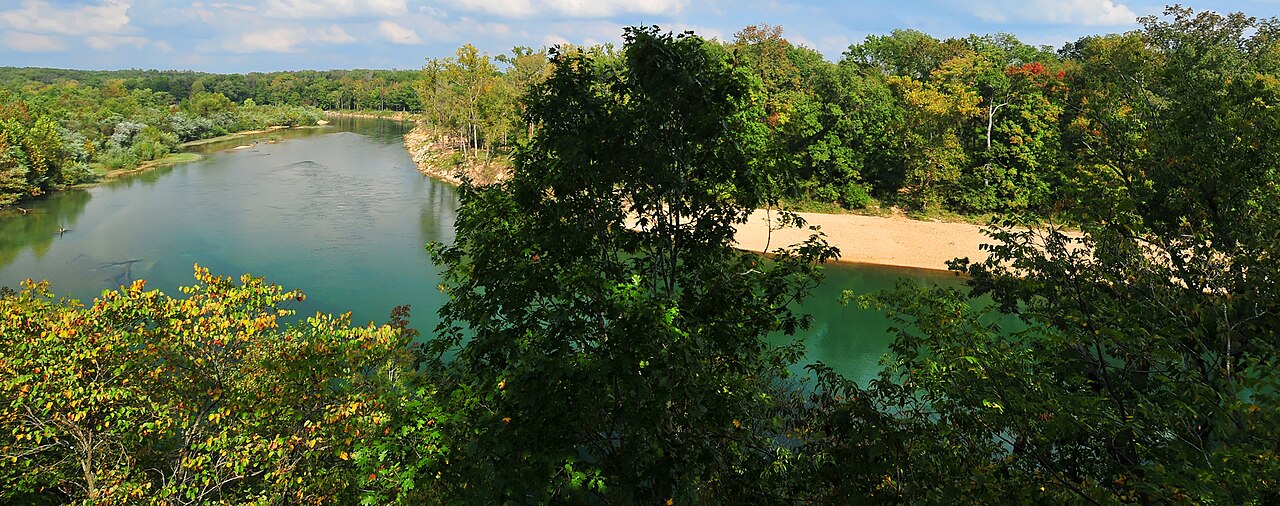
Current River, Missouri by Michael Gäbler, CC BY 3.0, via Wikimedia Commons
The plan was simple. Drive down to Cedargrove on the upper Current River, put in, float a couple of hours to a gravel bar, camp, and float out to Akers on Saturday. I’ve made plans like that before. They always look simple in the kitchen.
We got to the river around half past five. One other truck was in the lot, an older couple taking out a pair of kayaks, and the man walked over without being asked and grabbed the other end of our canoe. He told us the water was good, and the bugs were bad, and he was right about both. The water was low and so clear you could count the rocks on the bottom, and cold enough to make you rethink wading in shorts. Loading a boat for an overnight is its own small test of character. Everything you packed at home now has to fit in a space about the size of a bathtub, stay dry, and not tip you over. We made it work. Mostly by stacking.
The first hour is the reason I go. You push off, the gravel lets go of the hull, and the noise of the week just sort of quits. The river does the work for a while. You hear water running over rocks before you see the riffle. A heron lifted off ahead of us and landed fifty yards down, then did it again, and again, like it was leading us somewhere and losing patience. Nobody said much. I’m not a big talker on the water. Suzie is, and for the first twenty minutes she narrated every turtle on every log. Then she went quiet too, and I knew the river had gotten her.
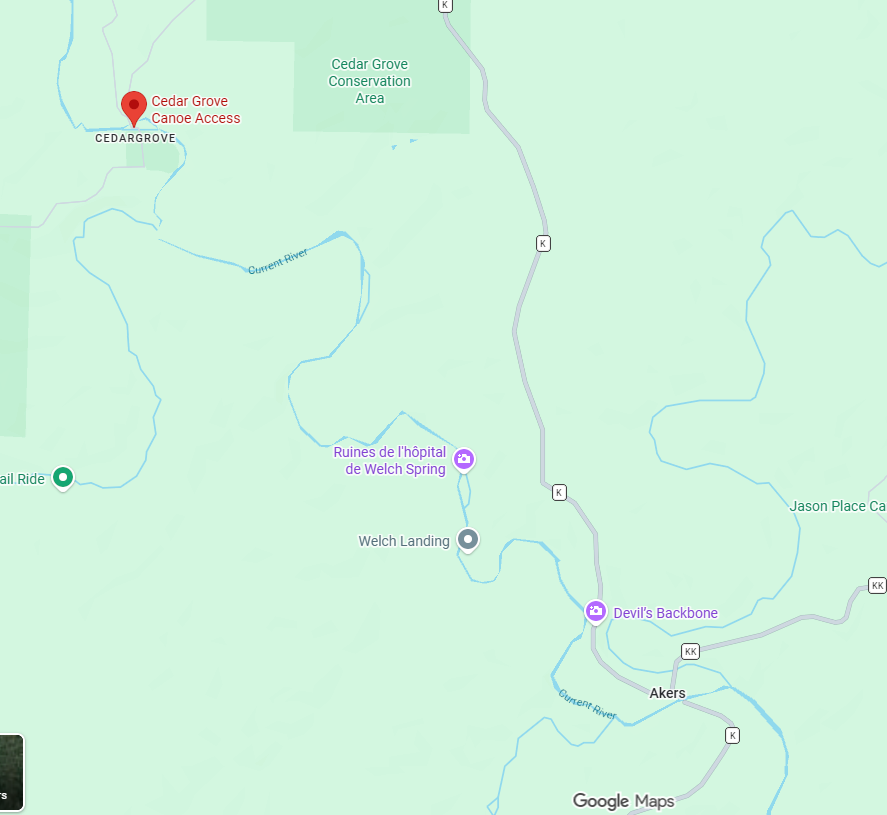
The Upper Current River near Cedargrove, Missouri. Map data © Google.
Then we met the root wad.
A big sycamore had come down on the outside of a bend, roots and all, and the current ran straight into it. I saw it late. I’m the one in the back, so steering is my job, and I’ll own that. We came around sideways, and the canoe hit the roots broadside and stopped. The river didn’t stop. It piled up against the upstream side of the boat, poured over the gunwale, cold and fast, and the cooler on top of the stack tipped over the side and took off downstream like it had somewhere to be.
I’ll be honest about how I handled it. Not calm. I said a word I won’t put in a magazine. Then I said it again. Suzie, sitting in the front with a river coming over her knees, told me to lean downstream, the right thing to do, and the opposite of what your body wants. I leaned. She shoved off a root with her paddle. The canoe swung free, about a third full of water, and we drifted to the next gravel bar, dragged it up, and dumped it out. Then I walked another hundred yards along the bank and found the cooler spinning slowly in an eddy, lid still shut, as if nothing had happened. The whole thing took maybe fifteen minutes. Afterward we sat on the bank and checked what got wet. My sleeping bag had a damp corner. The bread was soaked. The cooler that went for a swim was the one with the drinks, and every can was fine and colder than when we started. The trip didn’t end. It just got a little more interesting than I’d planned.
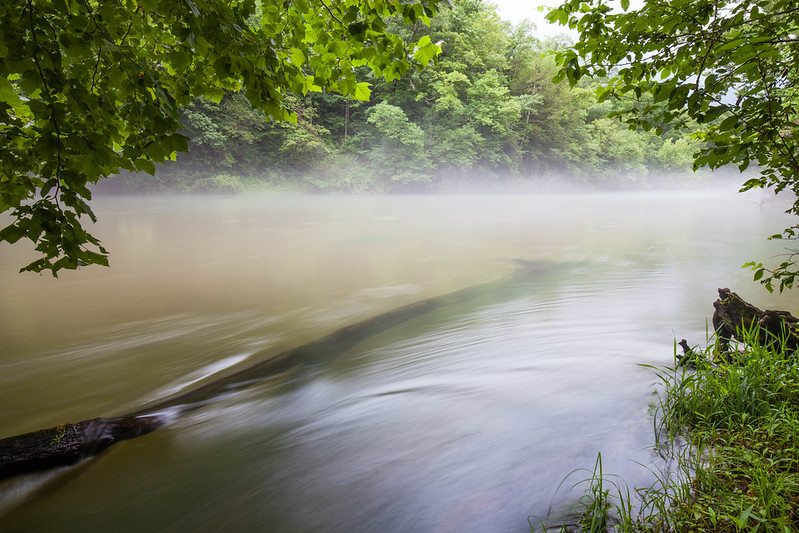
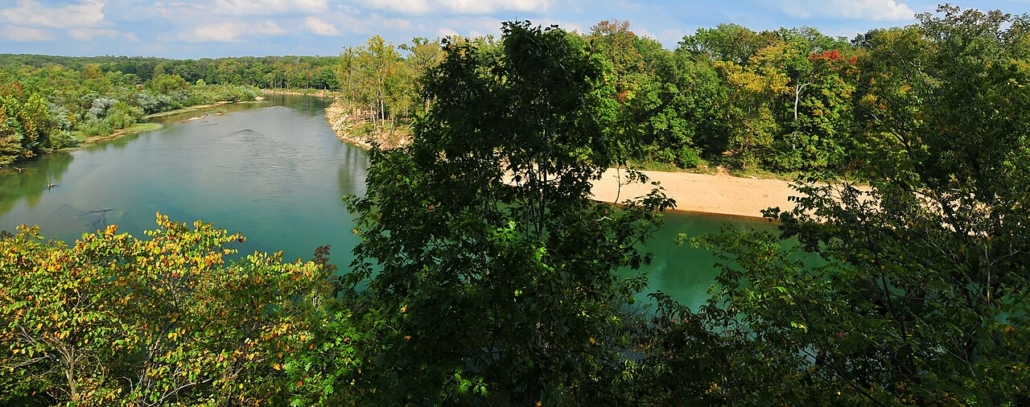
Current River State Park, Missouri State Parks | Current River, Missouri by Michael Gäbler, CC BY 3.0, via Wikimedia Commons
We found our gravel bar around seven thirty, with the light going orange. It was a long, wide bar on the inside of a bend, big enough to set up well back from the water, with a gray bluff across the river and cedars hanging off the top. If you’ve never camped on a gravel bar, here’s what you need to know. It’s flat until you lie down. Then every rock in Missouri finds you. It’s also one of the best places to sleep in the state, and I don’t think those two things argue with each other.
We set up camp. A small tent, a tarp strung over it just in case, and a damp sleeping bag laid out on the canoe to dry in what was left of the sun. I got a fire going with driftwood, which is the one part of camping I’m actually good at. Supper was brats and potatoes cooked in foil over the coals, and soggy bread toasted until it wasn’t soggy anymore. It tasted better than it had any right to. Food always does out there. I’ve never figured out if that’s the air or just being worn out.
After dark, the river got louder. It doesn’t really, but it seems that way when everything else goes quiet. Frogs. Something splashing that I decided was a fish. Two barred owls somewhere up on the bluff, calling back and forth like they were arguing over whose turn it was. Suzie laughed every time one of them answered. Then the stars came out, more of them than we ever get at home, and we sat by the fire until it was just coals.
Morning is my favorite hour of the whole weekend. Fog sat on the water, thick enough that the bluff across the river was just a gray shape.
The gravel was wet and cold, and coffee took forever because I’m stubborn about how I make it. Suzie sat at the water’s edge with her coffee in both hands, saying nothing, which, for her, was a compliment to the morning. A pair of wood ducks came down the river through the fog, close enough to hear their wings, and neither of us moved until they were gone.
We packed up slower than we unpacked. Everything was damp. I noticed I still had the cast iron skillet and hadn’t used it once. I put it back in the boat anyway.
The float out was easy, a few hours of slow water and short riffles, with the fog burning off by the time we passed the first bend. I gave every root wad a very wide berth. We took out at Akers around noon. The shuttle driver who ran us back to the truck asked how the trip was, and Suzie told him the whole root wad story before I could get my version in. Hers was better. I came off a little worse, which is probably fair.
People ask me why I go out almost every weekend. I usually say something about getting outside, because that’s easier. The real answer is smaller than that. On Friday afternoon I’m a guy with a to-do list. By Saturday morning on a gravel bar, I’m a guy trying to light wet wood, and that’s the whole list. I don’t come back a different person.
I come back the same guy with a sunburn, a damp sleeping bag, and a little more room in my head.
Somewhere on the long drive home, Suzie asked when we were going back. I said two weeks. One cooler. She said we’d see about that.